Does Grayscale Actually Help Phone Addiction? What Studies and Real Users Say
Two studies found grayscale cuts screen time by 20–39 minutes a day, but it doesn't stop you unlocking your phone, and it didn't improve sleep quality. Here's what people report after weeks in black and white, who it doesn't work for, and the setup tweaks that make it stick.
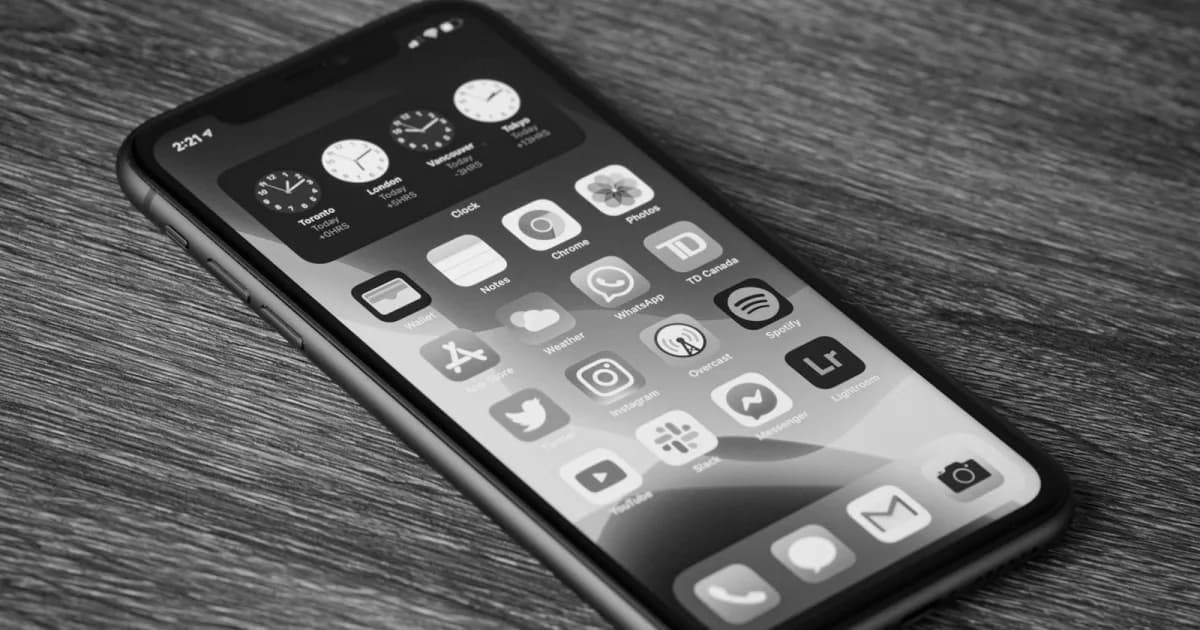
Grayscale is the most-recommended free trick for phone addiction. Turn your screen black and white, the theory goes, and the slot machine in your pocket loses its lights.
It's also one of the most argued-about. For every Reddit post titled "Grayscale changed my life", there's another titled "It does not work for me."
Both camps are right, and the research explains why. Here's what the studies actually measured, what people report after weeks of using it, and how to set it up so it has the best chance of working for you.
(Looking for the settings themselves? See our grayscale setup guide for every phone.)
TL;DR
- It works, but modestly: studies found about 20–39 fewer minutes of screen time per day.
- It doesn't stop the checking habit. In the 2024 study, people unlocked their phones just as often.
- It didn't improve sleep quality, and it doesn't reduce blue light or save meaningful battery.
- Always-on beats evening-only, according to users who tried both.
- Best as one layer of several, not a fix by itself.
What the Research Found
There are two studies worth knowing, and together they give a clear picture.
Holte & Ferraro (2020), The Social Science Journal. College students who switched their phones to grayscale reduced their daily screen time by about 38–39 minutes (the University of Cincinnati's write-up cites 39 minutes across roughly 220 students). A follow-up by the same research group reported reductions in screen time and in anxiety among participants who used grayscale.
Dekker & Baumgartner (2024), Mobile Media & Communication. 84 participants logged their phone use for a normal baseline week, then a grayscale week. The results:
- Daily screen time dropped by 20 minutes.
- The number of daily unlocks didn't change. The authors read this as evidence of "deep-rooted checking habits."
- People felt more in control of their phone use, and reported less overuse, less "online vigilance," and less stress.
- Grayscale did not affect productivity or sleep quality.
Put together: grayscale makes the phone less rewarding once you're on it, so sessions get shorter. It doesn't stop the reflex that makes you pick it up. That single finding explains almost everything users report.
Why this matters: If your problem is long scrolling sessions, grayscale targets it directly. If your problem is picking up your phone 100 times a day, grayscale on its own won't change that. You need something that adds friction before the unlock, like distance, a blocker, or a charging spot in another room.
What People Report After Weeks in Grayscale
When it works, it works fast
Many success stories describe an almost immediate effect. A Pixel 7 user who had been shopping for a dumbphone tried grayscale out of desperation:
"The effect was immediate. My brain was expecting a dopamine hit from the phone that it wasn't getting."
A long-term user who has kept their phone gray about 90% of the time since November said the biggest benefit wasn't total screen time but what they used it for: "I don't really use TikTok that much anymore and I have more time to focus on other things." They also noticed something many people report: "When I do turn my colors back on it's incredibly stimulating and the colors are so vibrant that it's uncomfortable."
Others describe the world gaining what the phone lost: grayscale "just makes other things appear more interesting than my phone. because yk, other things are in colour."
For some people, it simply doesn't
The failures are just as clear:
"Am I really the only person for whom this doesn't work? I set my phone so it automatically turns to greyscale in the evening and for the entire night and it doesn't really make me use it less before bed. If I get caught up with scrolling Reddit or something my brain doesn't really care if it's in color or greyscale."
That fits a pattern across user reports: text-heavy scrolling like Reddit, news, and comments loses little in grayscale, while video and image feeds lose the most. (The studies measured total screen time, not which apps were affected.)
Another user went further: "I got so used to greyscale to the point I still have 8 hours of screentime." Their habit had adapted to the gray.
An r/ADHD poster who tried it after seeing it recommended everywhere: "It does not work for me." A commenter added a practical problem: it made their banking app hard to read.
It can feel bleak, and that's partly the point
One r/nosurf thread is simply titled "Greyscale is depressing." The top replies: "That's the point..."
Still, this matters if you're going through a hard time. One commenter in that thread mentioned a recent loss. If grayscale makes you feel worse rather than just bored, it's fine to choose a different tool.
The habituation warning
A reply to a success story in r/dumbphones offered the most useful caution:
"Grayscale can be a super helpful tool to get fast results, but beware! You can easily get used to it, and fall back into old habits (with just less color now). So take the opportunity to implement other tools and techniques if you can, don't depend only on that."
Quick Answers to the Other "Does Grayscale…" Questions
| Question | Short answer |
|---|---|
| Does grayscale help sleep? | Not directly: the 2024 study found no effect on sleep quality. It may help you put the phone down sooner. |
| Does grayscale reduce blue light? | No. Gray and white pixels still use blue light. Use Night Shift / Night Light instead. |
| Does grayscale save battery? | Not meaningfully. Brightness and dark mode matter, not color. |
| Does grayscale help eye strain? | Some users find it easier for reading; there's no solid evidence. Brightness and breaks matter more. |
| Does grayscale help ADHD? | Reports are split. Some ADHD users say it helps, others say it doesn't. No specific research we're aware of. |
| Does grayscale reduce dopamine? | It makes the phone less rewarding to use, which shortens sessions. "Reduce dopamine" overstates what's been measured. |
How to Make Grayscale Actually Stick
Users who kept it going for months tend to share the same setup choices.
1. Keep it on all the time, not just at night
The user who said evening-only grayscale did nothing got this reply: "I also only had it activated for the evening and it didn't do much, however I changed it to greyscale mode always and it definitely was a lifechanger."
2. Bring color back automatically, only where you need it
The most common reason people abandon grayscale is friction in the wrong places: photos, maps, the camera. Users solve it with automations:
- iPhone: In the Shortcuts app → Automation → App, choose the apps that should trigger it, set it to Run Immediately, and add Set Color Filters. One user's version turns grayscale on when they open social media and back off when they leave. Others do the reverse: always gray, except color for Camera and Photos.
- Samsung: Use Modes and Routines. One user keeps a mode that turns grayscale on all the time and a second mode that switches it off whenever the Gallery or Camera app opens.
3. Re-enable it automatically
One user schedules grayscale to switch back on "a couple of set points throughout the day, so if I turn it off in the morning and forget to turn it back on again, in the afternoon it will turn on again automatically."
4. Try partial grayscale
Some people find full grayscale too bleak and turn it down instead. One user runs it at "like 75% greyscale so there is a touch of hues but very light," and still finds the impact "huge."
5. Pair it with one physical boundary
Because grayscale doesn't touch the checking reflex, the strongest setups combine it with something that does. One commenter's advice: "Keep it on, but pair it with one physical boundary such as charging outside the bedroom; visual boredom helps, while distance catches the moments when habit ignores the color." See what happens when you keep your phone out of the bedroom, or a stricter option like a blocker you can't switch off.
So, Should You Try It?
Yes. It's free, it takes 30 seconds, and the research says it shortens your phone sessions. Just go in with the right expectations:
- Expect shorter scrolling sessions, especially on video and image apps, and possibly a feeling of more control.
- Don't expect fewer pickups, better sleep, less blue light, or a cure on its own.
- Give it two weeks always-on before judging, and add automations so it doesn't get in your way.
If grayscale isn't enough, the next steps up are friction apps like ScreenZen or Opal, then physical distance, then a minimalist phone.
The Digital Feng Shui Angle
In Feng Shui, color is energy. Red stimulates, blues and greens calm, and a room's palette changes how people behave in it without anyone noticing. App designers know this as well as any Feng Shui practitioner: red notification badges and saturated icons are arranged to pull you in.
Grayscale is a palette change for your phone. It quiets the room. But palette alone has never made a space work: a calm-colored room with a television on the pillow is still a room you won't sleep in. Grayscale works best as the finishing touch on a space that's already arranged well. Use it alongside a clean home screen and a notification system that respects your attention.
Where to Go Next
- How to Enable Grayscale Mode on iPhone & Android — exact settings paths and the triple-click shortcut.
- ScreenZen vs Opal — the next step up: friction apps vs hard blocks.
- What Happens When You Keep Your Phone Out of the Bedroom — the physical boundary that pairs best with grayscale.
- How to Reduce Screen Time: 12 Methods Ranked — where grayscale fits among the alternatives.
Frequently Asked Questions
Does grayscale help phone addiction?
Modestly, yes. A 2020 study (Holte & Ferraro) found college students cut daily screen time by roughly 38–39 minutes after switching to grayscale, and a 2024 study (Dekker & Baumgartner) measured a 20-minute daily drop. But the 2024 study also found people unlocked their phones just as often, so grayscale makes each session shorter rather than breaking the checking habit.
Does grayscale help you sleep?
Not directly, according to the best available evidence. The 2024 Dekker & Baumgartner study found grayscale reduced stress and screen time but did not affect sleep quality. Some people find it helps them put the phone down sooner at night, but if sleep is the goal, keeping the phone out of the bedroom is a bigger lever.
Does grayscale reduce blue light?
No. Grayscale removes color, not blue light. White and gray pixels still use the screen's blue subpixels. For less blue light at night, use Night Shift on iPhone or Night Light / Eye Comfort on Android, and lower the brightness.
Does grayscale save battery?
Not meaningfully. Grayscale is a color filter; it doesn't make pixels darker, and on OLED screens it's brightness, especially dark pixels, that saves power. Dark mode and lower brightness save far more battery than grayscale.
Does grayscale help with eye strain?
Some users say grayscale feels easier on their eyes, especially for reading, but there isn't good evidence either way. Brightness, distance, and breaks matter more for eye strain than color.
Why doesn't grayscale work for me?
It doesn't work for everyone. Users who say it failed usually describe one of three things: their brain stopped caring about color after a while, they only used it in the evening, or they simply switched it off whenever it got in the way. Grayscale works best always-on, with automations that bring color back only for the camera and photos, and combined with at least one harder boundary.
Tagged
More in Smartphone Feng Shui
Brick vs Unpluq: What Users Actually Say After Months With a Physical Phone Blocker (2026)
10 min read
Light Phone III vs Mudita Kompakt vs Sidephone: What Owners Say After Months (2026)
12 min read
Timed Phone Lock Boxes: What Owners Say After Months (kSafe, MindSight, and the $12 DIY Version)
9 min read
Ready to start from the beginning?
The 30-Day Digital Feng Shui Challenge is a structured, day-by-day program to redesign your digital environment for good.
Start the 30-Day Challenge →