Is Brain Rot Real? A Digital Feng Shui Diagnosis (And the Fix)
Brain rot — Oxford's 2024 Word of the Year — describes the mental fog from endless low-quality digital content. Learn what it actually is, why it happens, and how Digital Feng Shui offers a practical, structured path back to mental clarity.
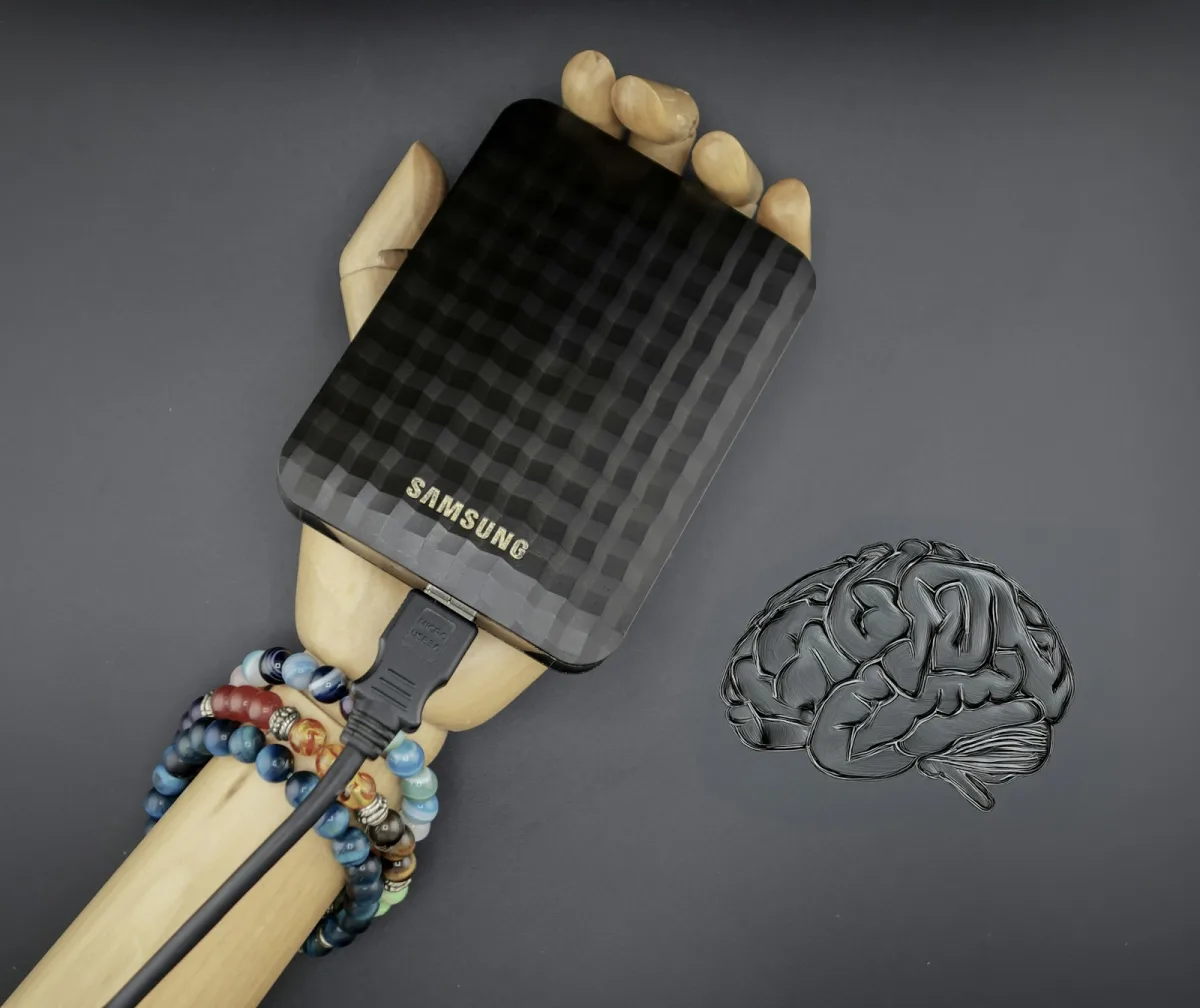
Oxford University Press named it their Word of the Year for 2024. In 2026, it's still one of the most-searched wellness terms on the internet. Everyone seems to know what it feels like — even if they couldn't explain it until they heard the name.
Brain rot.
That dense, foggy feeling after an hour of scrolling Reels. The inability to focus on a book you used to love. The creeping sense that your attention span has quietly left the building. The way a two-minute task feels like climbing a mountain.
If any of this sounds familiar, this article is for you.
What Is Brain Rot, Actually?
Brain rot is not a clinical diagnosis. It's a cultural term describing a pattern of cognitive decline associated with overexposure to low-quality, high-stimulation digital content — primarily short-form video, infinite-scroll social media, and notification-driven environments.
The Washington Post, Frontiers in Public Health, and numerous neuroscience researchers have now written seriously about the phenomenon. The consensus picture looks something like this:
The mechanism:
- Short-form content (TikTok, Reels, Shorts) delivers dopamine hits in 15–60 second intervals.
- Your brain adapts to this pace. Anything slower — a conversation, a book, a meal — starts to feel unbearably dull.
- Prolonged screen time (now averaging over 11 hours daily for working adults) keeps your nervous system in a state of low-level hyperarousal.
- Sleep quality drops because the brain never fully deactivates.
- Cognitive capacities — sustained attention, deep reading, creative thinking — gradually weaken from disuse.
Is it permanent? No. Is it serious? Yes — particularly for young people in formative developmental stages, and for anyone trying to do cognitively demanding work.
The Feng Shui Perspective: In classical Feng Shui, when Chi (life force energy) stagnates or moves too fast in the wrong channels, it creates Sha Chi — harmful energy that damages the health and clarity of everyone in the space. Brain rot is what Sha Chi looks like in your mental environment. The fix isn't willpower. It's redesigning the environment so good Chi can flow again.
The Brain Rot Self-Diagnosis
Before we talk about solutions, it helps to understand where you actually are. Answer honestly:
Attention:
- Can you read a book chapter (20–30 minutes) without reaching for your phone?
- Can you sit through a 2-hour film without checking your phone more than once?
- Can you have a conversation for 15 minutes without feeling the pull to check your phone?
Cognitive:
- Do tasks that used to feel easy now feel effortful?
- Does starting any task — even a small one — feel harder than it used to?
- Do you find yourself re-reading the same paragraph multiple times?
Emotional:
- Do you feel vaguely anxious or restless when your phone is out of reach?
- Do you feel worse after most scrolling sessions than before?
- Has your sense of time distorted? (Hours disappearing, days blending together?)
Sleep:
- Is it harder to fall asleep than it was three years ago?
- Do you wake up feeling unrestored even after 7–8 hours?
- Is your phone the last thing you look at before sleep?
If you answered yes to more than half of these questions, your digital environment has meaningful brain rot symptoms. This isn't a judgment — it's data. And data points to solutions.
The Digital Feng Shui Diagnosis Framework
In Feng Shui, a practitioner doesn't just walk into a space and start moving furniture. They first diagnose the energy patterns — identifying where Chi is blocked, where it's moving too fast, and where harmful energy has accumulated.
Your digital life has the same patterns. Let's map them.
Pattern 1: Stagnant Chi (Digital Clutter)
Symptoms: You feel overwhelmed every time you open your phone or computer. There are apps, files, tabs, and notifications you haven't meaningfully engaged with in months. Everything feels vaguely urgent and nothing gets done.
Feng Shui diagnosis: Chi is blocked. Energy cannot flow through a cluttered space. The mental load of unprocessed digital clutter keeps your nervous system in a low-level state of overwhelm.
Direction: Clear and organize before anything else.
Pattern 2: Rushing Chi (Overstimulation)
Symptoms: You feel jumpy, distracted, and unable to settle. You switch between apps constantly. Longer content feels impossible. You're consuming a lot but absorbing very little.
Feng Shui diagnosis: Chi is moving too fast — the digital equivalent of sharp angles and direct attacking lines (called "poison arrows" in classical Feng Shui). Short-form content has accelerated your mental Chi beyond a healthy pace.
Direction: Slow the flow. Introduce friction. Replace fast-Chi content with slower, deeper formats.
Pattern 3: Sha Chi (Toxic Content Streams)
Symptoms: You feel worse — more anxious, more inadequate, more despairing — after consuming content, even though you keep consuming it. Your feed is full of outrage, comparison, and content engineered to keep you upset.
Feng Shui diagnosis: Active Sha Chi — harmful energy that is directly attacking your mental wellbeing. Unlike clutter or speed, this needs to be removed, not reorganized.
Direction: Eliminate the sources, not just manage consumption.
The Feng Shui Recovery Protocol
This isn't a 24-hour digital detox. Those work the way crash diets work: temporary relief, no lasting change. This is a restructuring of your digital environment so that it stops generating brain rot by default.
Phase 1: The Diagnostic Sweep (Week 1)
Before changing anything, observe. For seven days, note:
- Which apps you open automatically without deciding to
- How you feel before vs. after each significant scrolling session
- What time of day your digital behavior feels most out of control
- Which content makes you feel better and which makes you feel worse
This isn't about guilt. It's about accurate mapping. You can't fix what you haven't clearly seen.
Action Step
Practical tool: On iOS, go to Settings → Screen Time and review your weekly report. Most people are significantly surprised by the numbers. Don't look away from it.
Phase 2: The Three Removals (Week 2)
Based on your diagnostic sweep, identify and address:
Remove the Sha Chi sources first. Which platforms or content types consistently made you feel worse? These get removed — not time-limited, not restricted. Removed. If Instagram Reels leaves you feeling inadequate and hollow every single time, it is a Sha Chi source. It goes.
Remove the automatic triggers. Every app that you open on reflex — without a conscious decision — needs to either be deleted from your home screen or deleted entirely. The reflex open is the core brain rot mechanism. You're breaking a conditioned loop. One underrated technique: enable grayscale mode on your phone — removing color eliminates the visual dopamine triggers (candy-red icons, bright feeds) that make apps irresistible to open in the first place.
Remove notifications from non-essential sources. Every notification is a tiny interruption to your natural mental Chi. Most of them are Sha Chi in miniature — tiny attacking energy jolts throughout your day. Turn off notifications for everything except calls and direct messages from people you care about.
Phase 3: The Positive Restructure (Week 3)
This is where most digital detox programs stop — at restriction. Digital Feng Shui goes further, because a home with furniture removed is not a good home. It needs to be redesigned, not emptied.
Replace fast-Chi content with slow-Chi content:
| Fast Chi (Draining) | Slow Chi (Restoring) |
|---|---|
| Short-form video | Long-form documentary or podcast |
| Infinite social scroll | A specific article or newsletter |
| Notification checking | Intentional check-in window |
| News alerts | One curated daily briefing |
| Multiple browser tabs | One tab, one task |
YouTube deserves special mention here — it can be either fast-Chi or slow-Chi depending entirely on how you've configured it. Left to defaults, the algorithm optimizes for watch time over your wellbeing. Intentionally restructured, it can become a genuine source of deep, restoring content. Our YouTube Digital Feng Shui guide covers exactly how to retrain your feed.
Introduce analog anchors: Physical activities that require full attention — cooking, walking without earbuds, handwriting, reading physical books — actively rebuild the attention pathways that screen overuse erodes. These aren't just nice to have. They are the neurological rehabilitation.
Design intentional consumption windows: Instead of a phone available at all times, designate specific windows for digital consumption. Three 20-minute check-in periods per day handles 95% of what most people actually need to stay on top of. Everything else is noise.
The Recovery Timeline
Recovery from brain rot symptoms follows a fairly predictable pattern, based on reported experiences across the digital minimalism community:
Days 1–3: Discomfort. Restlessness. The urge to check. This is normal — it's withdrawal from the dopamine loop. Sit with it.
Days 4–7: The first signs of settling. Longer attention windows start to emerge. Sleep begins to improve.
Weeks 2–4: Deeper concentration returns. Reading becomes easier. Tasks feel less monumental. The vague background anxiety starts to lift.
Months 2–3: Sustained attention returns to something like normal. Creative thinking re-emerges. The phone stops feeling like a compulsion.
Month 3+: The restructured environment has become the new normal. The old patterns feel genuinely unappealing.
The hardest moment is the beginning. The restlessness of the first three days is the most intense and passes fastest. If you can hold the restructured environment for two weeks, the behavioral change begins to self-sustain.
The Long Game: Maintaining Clear Chi
Brain rot doesn't return if you maintain good digital Feng Shui. The key practices are simple:
Weekly: Review your screen time data. No judgment — just information. Make one small adjustment if the numbers suggest drift.
Monthly: Audit your apps. Delete what you haven't used. Notice if any new Sha Chi sources have crept in.
Seasonally: Reassess your notification settings, your content feeds, and your analog practices. Your needs change. Your digital environment should reflect that.
Annually: Consider a more significant audit — a week or two of genuinely reduced digital consumption. Not as a punishment, but as a reset and a calibration.
Brain rot is real. But it is also reversible. Your attention — the ability to focus deeply, think clearly, be present with the people and work you love — is not gone. It's being suppressed by an environment that was never designed to serve you.
Digital Feng Shui is the practice of redesigning that environment. Not by rejecting technology, but by reclaiming authorship over how it's arranged in your life.
Your mind is worth the effort.
Ready to start with a concrete structure? Try our 30-Day Digital Feng Shui Challenge for a step-by-step recovery protocol. For a comprehensive toolkit, our guide to reducing screen time covers 12 proven methods. Or begin with your phone — the most intimate and most invasive digital space — with our Dumb Phone Alternative Guide. Want one quick win you can do in 30 seconds? Enable grayscale mode — research shows it reduces daily screen time by about 38 minutes. Take back control of interruptions with our Do Not Disturb & Focus Mode guide. Struggling specifically with YouTube rabbit holes? YouTube Digital Feng Shui shows how to retrain the algorithm. Curious what a full digital detox actually feels like, week by week? Read our Dopamine Detox Timeline. Thinking about leaving social media entirely? Our guide covers what actually happens when you quit. New here? Start with the complete digital feng shui introduction.
Tagged
More in Core Definition

Ready to start from the beginning?
The 30-Day Digital Feng Shui Challenge is a structured, day-by-day program to redesign your digital environment for good.
Start the 30-Day Challenge →